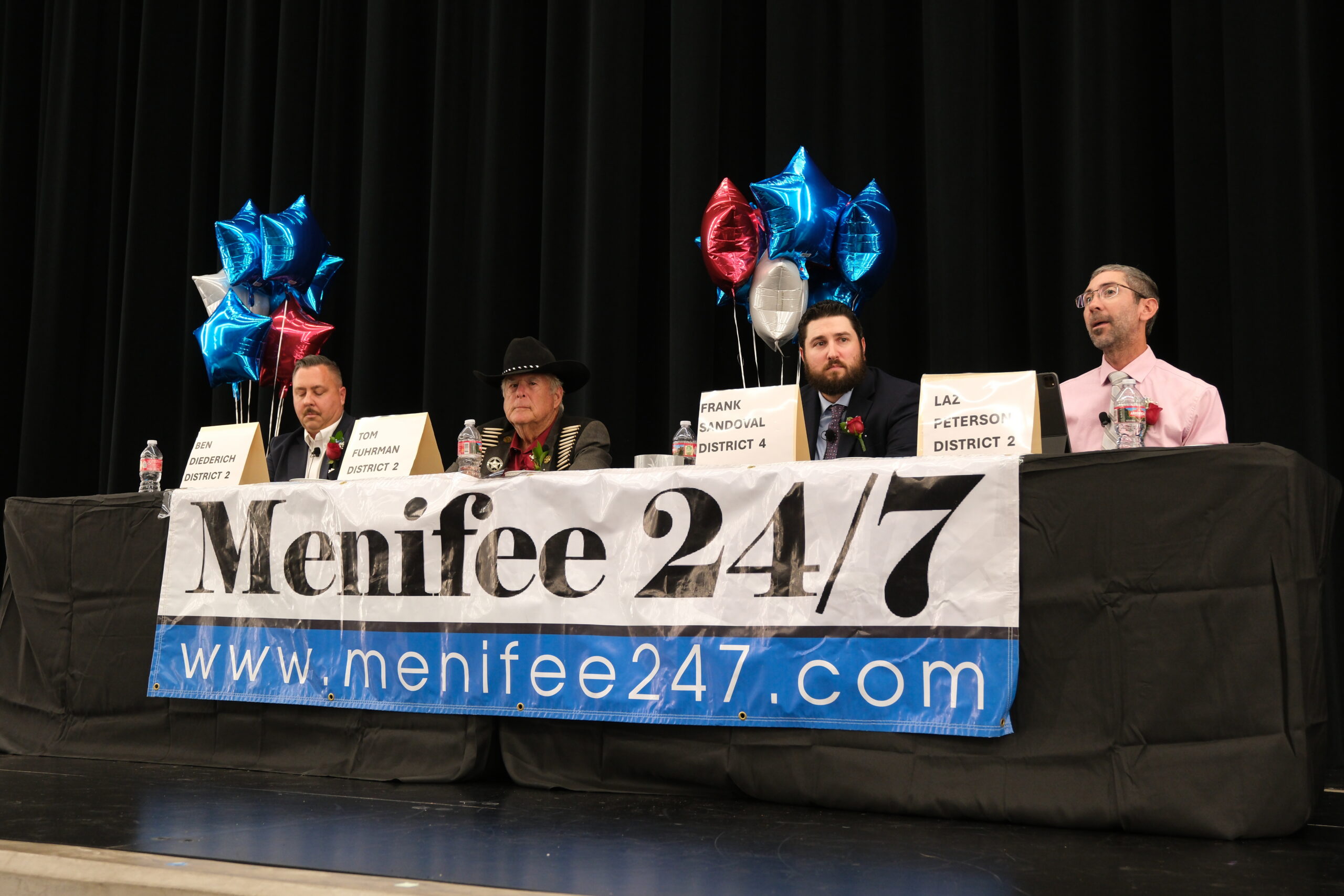
Menifee City Council candidates discussed growth, warehouse development, e-bike safety and other topics during a candidate forum hosted by Menifee 24/7 on Wednesday, Sept. 23.
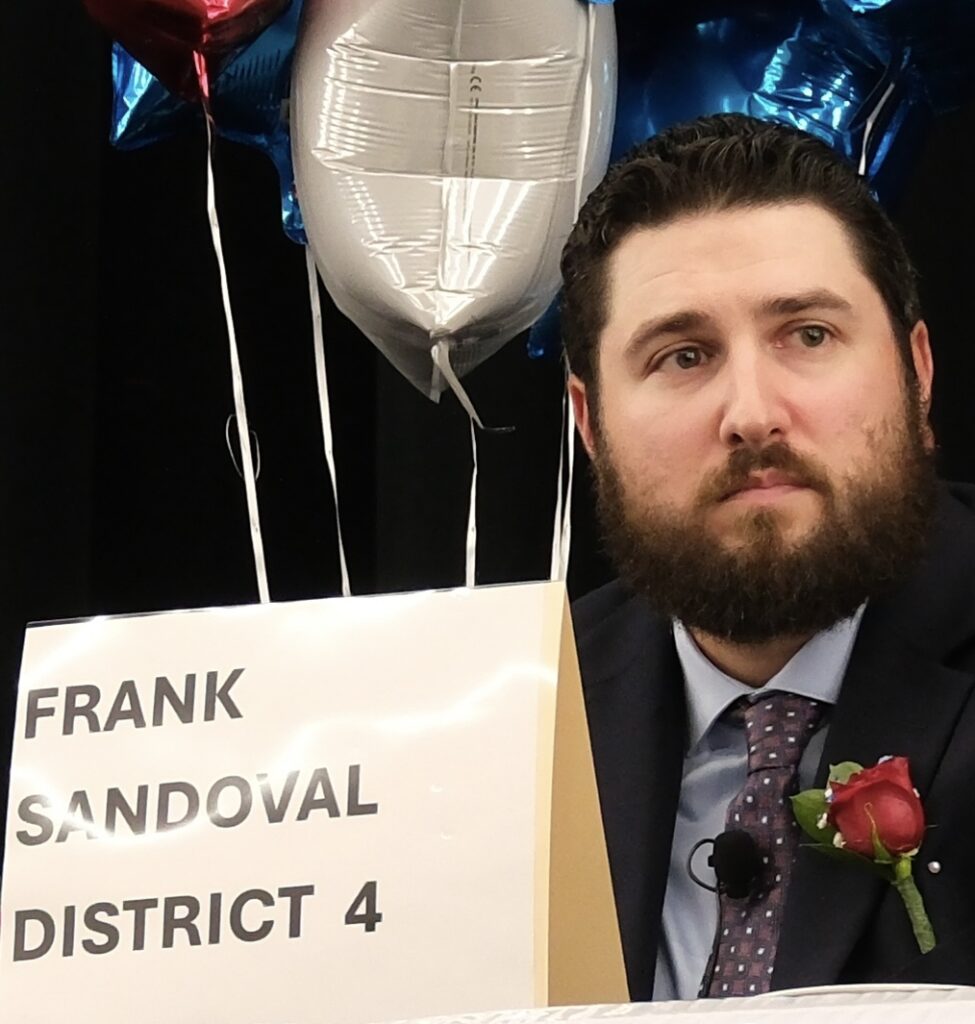
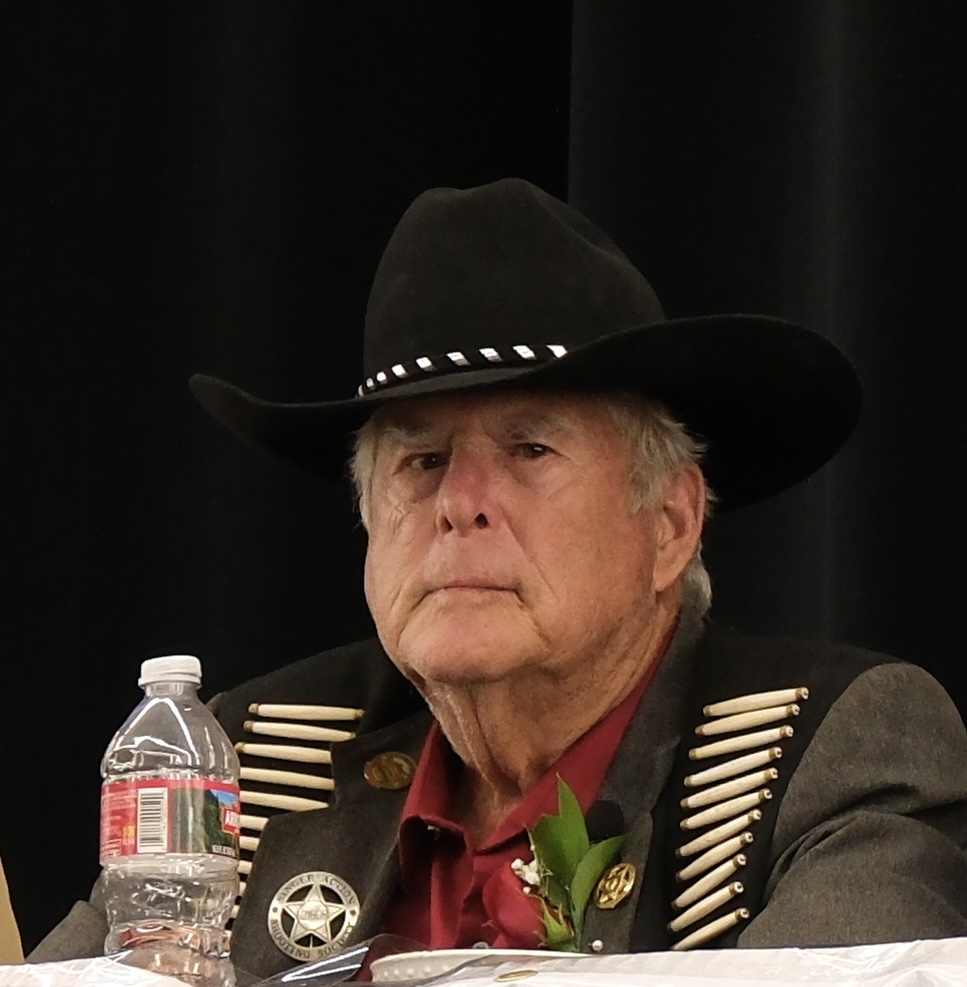
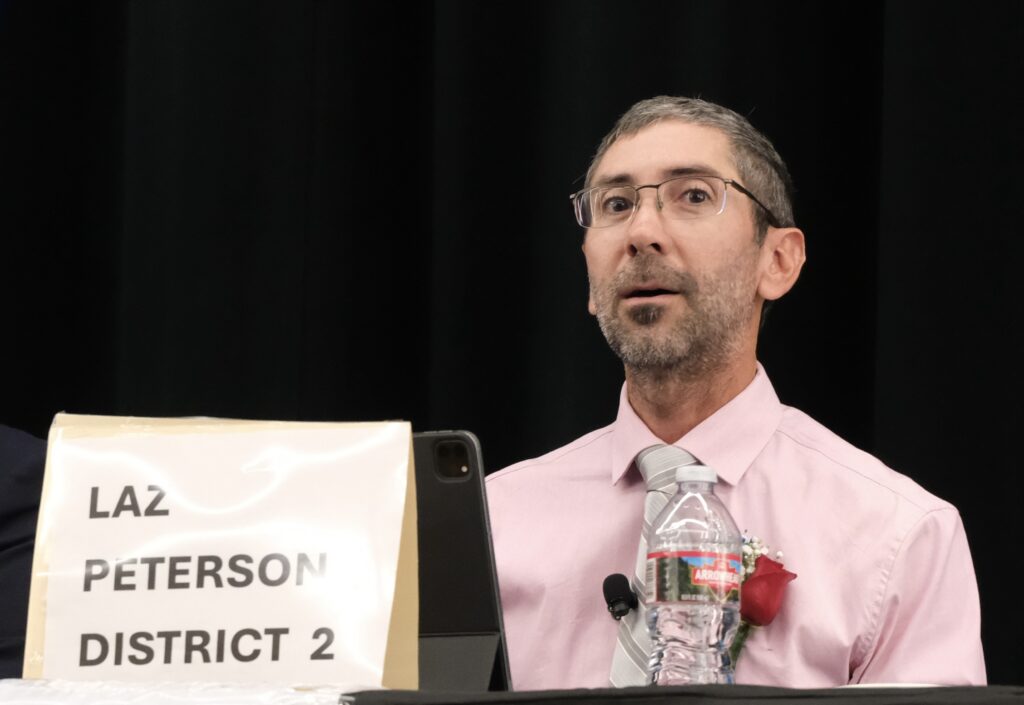
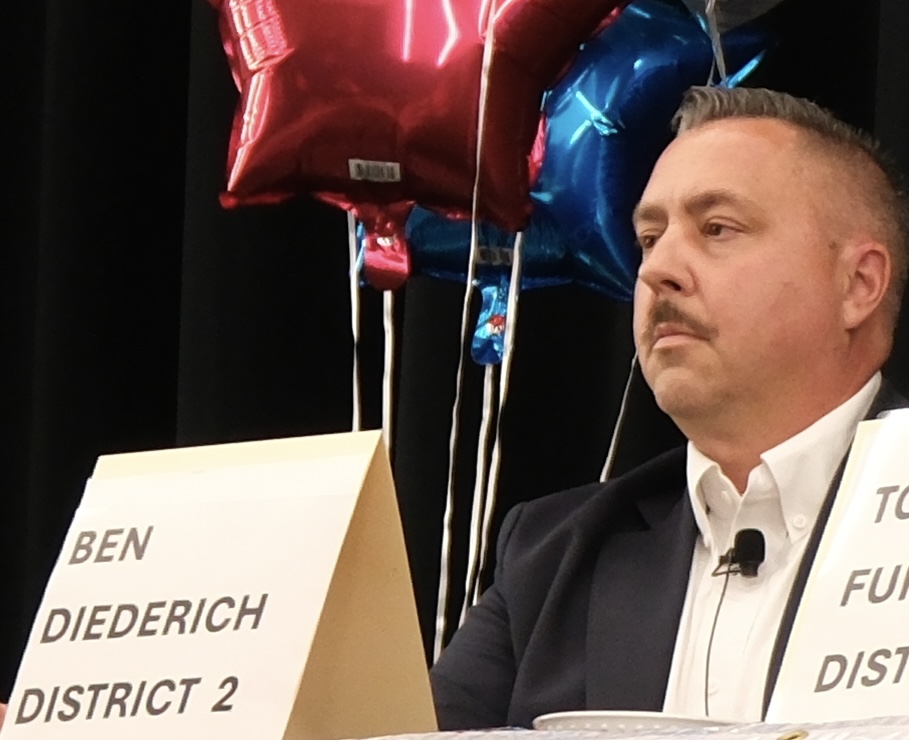
District 2 candidates Councilman Ben Diederich, former Councilman Tom Fuhrman and Laz Peterson participated alongside District 4 candidate Frank Sandoval. District 4 candidates Randy Madrid and Daniel Stephens did not attend.
Candidates answered a series of citywide and district-specific questions before taking questions from audience members.
Here’s a look at where the candidates stood on some of the major topics discussed.
Growth and infrastructure
Sandoval said the city should determine development impacts and infrastructure funding ahead of time and require development to contribute toward improvements. He also supported pursuing outside funding and identified widening McCall Boulevard and improvements to the McCall interchange among his District 4 priorities.
“Development needs to pay its fair share when it comes to Menifee,” Sandoval said.
Fuhrman said balancing growth and infrastructure requires people to work together to find solutions. He identified traffic as his top concern in District 2 and called for paving dirt roads and widening Holland and Scott roads.
Peterson said infrastructure should be completed before residential development rather than developers paying fees for improvements to be completed later. He identified roads and expanding sewer access as District 2 priorities.
“The asphalt has to be moving before the cars get on the ground,” Peterson said.
Diederich called for “smart growth” that considers private property rights and state housing requirements. He said developers should contribute toward infrastructure necessitated by their projects while the city prioritizes projects with the greatest citywide benefit, identifying infrastructure and traffic as major District 2 issues.
Warehouses and industrial development
Sandoval said Menifee has reached a threshold with large-format industrial development and called for a shift toward smaller industrial and manufacturing uses away from residential neighborhoods.
“In general, I don’t want any intersection between heavy industrial and residential,” Sandoval said.
Peterson said he supports development that generates tax revenue and jobs but opposes logistics uses involving heavy truck traffic. He favored advanced manufacturing and technology uses near freeways and separated from residences and schools.
Diederich said he would evaluate warehouse projects individually based on location and impacts, distinguishing logistics warehouses from other industrial uses. He said industrial development should generally be away from residents and accessible to freeways.
Fuhrman agreed with Diederich that warehouse projects should be evaluated based on their impacts and raised concerns about truck traffic near residential areas.
“I think there ought to be a system of streets only that the heavy trucks can go on, and there must be big buffers between residential areas and the buildings,” Fuhrman said.
E-bikes, student transportation and safety
Peterson said current city ordinances do not adequately address e-bike safety and called for more visible bike lanes and additional restrictions. He also supported exploring restored school bus service and said modified e-bikes can complicate enforcement.
Diederich called for greater parental responsibility and said he recently requested a future City Council discussion on strengthening the city’s e-bike ordinance. He also supported improving sidewalks and bike lanes and collaborating with school districts on bus service.
Fuhrman proposed an age requirement, licensing and testing for e-bike riders and suggested identifying plates that could help police avoid pursuits. He said parents should pay for restored school bus service.
Sandoval said education and enforcement are needed and stressed greater parental awareness. He supported working with school boards on bus service and suggested drones could potentially help police locate riders without engaging in pursuits.
Economic development, jobs and local amenities
Sandoval supported continued development around the Haun Road economic corridor, including completing the Garbani interchange, widening Haun Road and adding housing to support commercial development. He also called for technology and skilled-trade jobs and additional shopping and sit-down restaurants in District 4.
Peterson said a regional sports complex could attract visitors and spur surrounding commercial development and called for partnerships with Mt. San Jacinto College to prepare residents for skilled trade jobs.
“A sports complex would solve, in my opinion, almost every single issue related to that,” Peterson said.
Battery energy storage facilities
Diederich said he would evaluate battery storage projects individually based on location and mitigation measures, saying they could support the electrical grid but require stronger safety measures.
Fuhrman said he did not know enough about battery storage facilities to give an informed answer.
Sandoval said he recognizes the function of battery storage and is not completely opposed but raised concerns about safety and proximity to neighborhoods.
Peterson supported battery storage as a way to strengthen the electrical grid and reduce outages, saying properly handled facilities could benefit Menifee.
Flock cameras and privacy
Peterson supported Flock license plate reader cameras as a public-safety tool but said he would represent District 2 residents if a majority wanted them removed.
“A Flock camera to me is actually security for my family, for my properties, for my city,” Peterson said.
Diederich said public safety and privacy do not necessarily conflict and supported license plate readers with oversight and limits on their use. He said he would reconsider his position if the system were misused locally.
Fuhrman called the cameras a “fantastic tool” for identifying suspected criminals but opposed using them for routine traffic violations. He said identifying vehicles through license plates could help police avoid dangerous pursuits.
Sandoval supported the current use of the cameras but called for oversight of data retention, consequences for misuse and restrictions on sharing data outside Menifee.
“I believe that they should only be identifying vehicles, not people,” Sandoval said.
Quail Valley and District 2
Diederich described Quail Valley as long overlooked and identified park development, additional law enforcement resources, infrastructure and sewer expansion among his priorities.
Fuhrman focused on paving dirt roads and suggested circulation changes, including one-way streets.
Peterson called for improving roads and expanding sewer access by working with Eastern Municipal Water District and seeking state funding while preserving the area’s rural zoning.
Additional topics
Candidates also addressed the Town Center and amphitheater, home-based businesses and appointments to city commissions and committees.
Fuhrman said the amphitheater should be completed and also raised questions about plans for a new City Hall.
“Why haven’t we built a city hall and not pay $6 million a year to rent the building that they’re in now?” Fuhrman said.
Diederich supported additional entertainment and restaurants in the undeveloped portion of Town Center, while Peterson questioned the amphitheater’s location, space and parking.
On home-based businesses, Sandoval said the city should work with residents to better accommodate them. Peterson supported greater use of rural properties when activities do not negatively affect neighbors, while Diederich said government restrictions on private property should be minimized while balancing safety and impacts on neighboring properties.
“If it’s reasonable to do so, I think it needs to be streamlined and made available for people to use their property as they see fit,” Diederich said.
Fuhrman criticized the conditional use permit process.
On city appointments, Sandoval emphasized reliability, community involvement and avoiding business ties related to the position; Diederich cited skills, temperament and commitment; Fuhrman pointed to education and interviews; and Peterson said officials should seek qualified residents rather than rely solely on applicants.
Diederich also said he has asked the city to explore a formal process for verifying residency requirements for council members, candidates and commissioners.