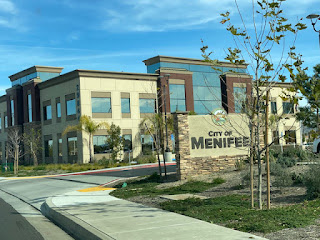


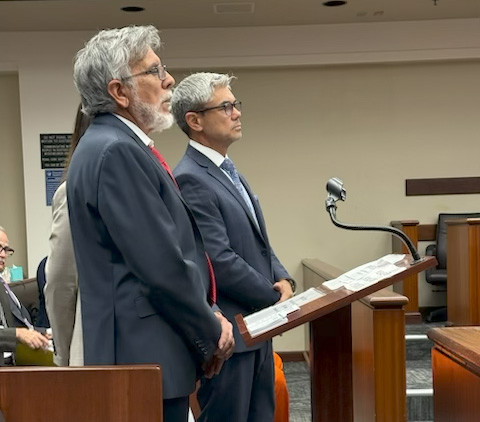

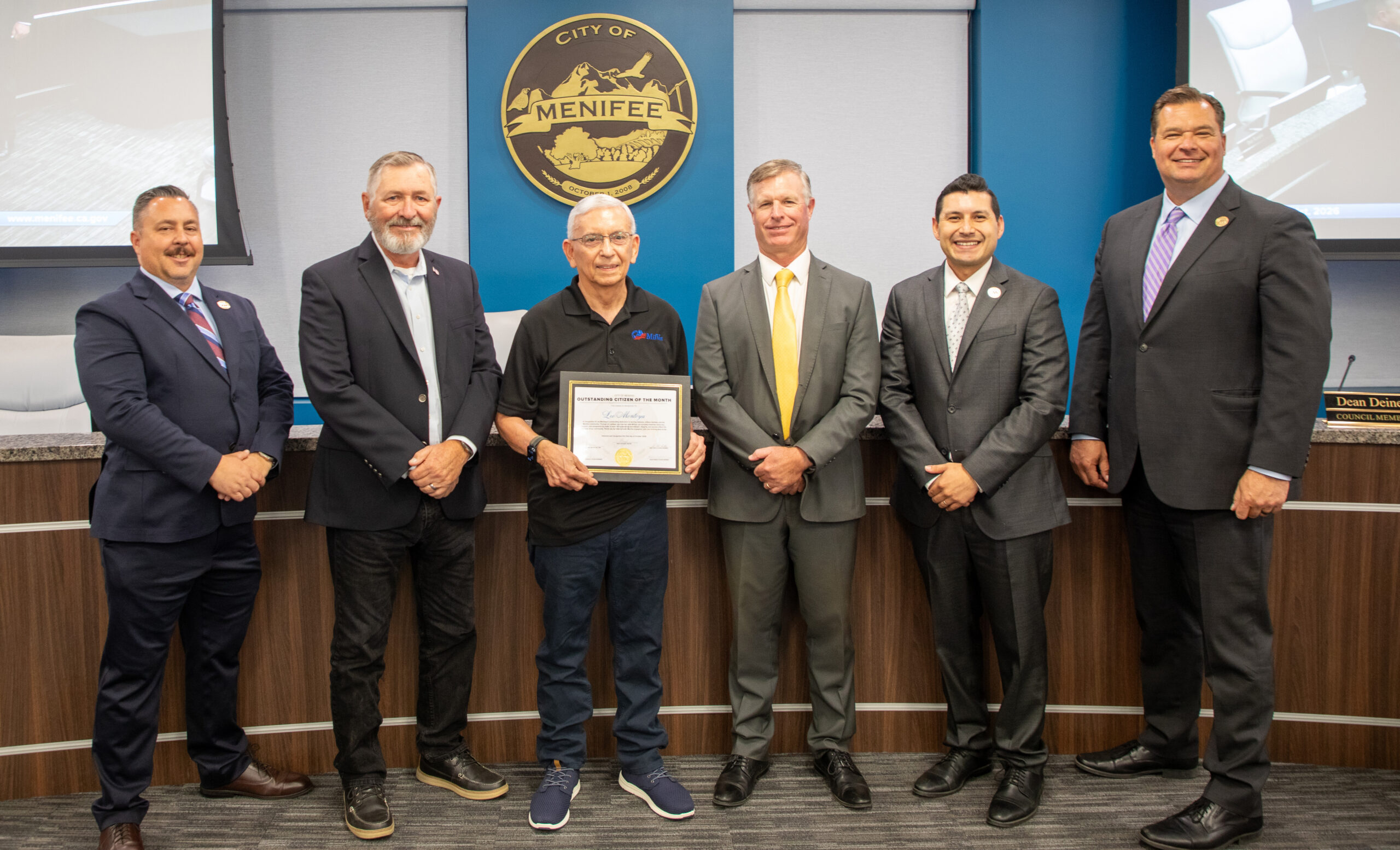
Menifee 24/7 has submitted an inquiry with the Fair Political Practices Commission (FPPC) regarding a policy decision by the City of Menifee on an upcoming appeal hearing that, according to legal rulings, appears to violate state law.
At issue is a ruling allowing Mayor Ricky Estrada to preside over a public hearing regarding his own appeal of a city commission’s action. According to FPPC regulations and California case law, a City Council member filing an appeal in his public capacity must recuse himself from voting on his own appeal.


Menifee 24/7 published a news story July 7 stating that Estrada has filed an appeal to oppose the Planning Commission’s May 13 approval of the Trumble/Watson warehouse project planned for northeast Menifee. His appeal, and two others, are scheduled to be heard during the Menifee City Council meeting on July 15.
(Correction to our earlier story: Estrada filed the appeal in his official capacity as mayor, not as a private individual).
Citing FPPC regulations and state law, the Menifee 24/7 article stated that as an appellant opposing the warehouse project, Estrada could only offer testimony from the speaker’s podium. He would not be allowed to sit on the dais and preside over his own appeal. But the City of Menifee responded to the published article by stating that Estrada would not have to recuse himself, and that he would be allowed to sit on the dais during the proceedings and cast a vote.
“The ruling was that as long as (Estrada) hasn’t made a predisposed decision, he can sit on the dais for the voting,” said Phil Southard, communications director for the City of Menifee.
Asked how filing an appeal of the project approval is not a predisposed decision, Southard did not comment. In a subsequent email, city clerk Stephanie Roseen stated the following:
“The mayor’s participation in the public hearing is consistent with both the Menifee Municipal Code and California law. The Municipal Code authorizes any member of the City Council to file an appeal of a Planning Commission decision. Filing an appeal does not, by itself, disqualify a council member from participating in the public hearing.
“Additionally, the Mayor’s participation does not present a conflict of interest under the California Political Reform Act, as administered by the FPPC. The FPPC’s conflict of interest provisions are intended to prevent public officials from participating in governmental decisions in which they have a disqualifying financial interest. Filing an appeal as an elected official, without a financial interest in the outcome, does not create such a conflict.”
That statement supports one phase of the City’s argument, because Estrada has no financial interest in the case. But it doesn’t overcome the FPPC’s further rulings on quasi-judicial impartiality, due process, and bias barriers that require public officials to recuse themselves in their own appeal hearings.
FPPC Advice Letter A-20-033 states that “An official cannot act in a quasi‑judicial capacity when they have taken a position as an advocate.”
In addition, there is case law from cases such as Nasha v. City of Los Angeles (2004), in which the following ruling was made: “A decision‑maker who has taken a position as an advocate cannot then act as an impartial adjudicator.”
Thomas Epperson, Esq. of Richards, Watson & Gershon has stated, “Filing an appeal is an act of advocacy. A person cannot be both advocate and adjudicator in the same matter.”
A check of other cities in Riverside County shows no documented instance of a city allowing a mayor or council member who filed an appeal, either officially or privately, to sit on the dais and vote on the same appeal. A source involved in local government stated that Murrieta has allowed such action on more than one occasion, but there is no documented evidence of this.
Virtually all cities in the county have policies similar to that of the City of Temecula. According to its City Council Protocol Manual and Temecula’s Municipal Code, council members are prohibited from:
— Adjudicating a matter in which they have taken a position
— Acting as both advocate and judge
— Participating in a hearing where they are an appealing participant
— Influencing a decision where they have a personal interest
An additional email from Roseen received Thursday morning includes the following statement:
“As a general matter, elected officials may hold and express policy positions on broad issues that come before the City, including matters related to land use and development. However, due process requires that decision-makers not prejudge the merits of a specific project before the public hearing.
“The City Council review through the filing of an appeal, in and of itself, does not constitute prejudgment of a particular project or predetermine how a Councilmember will evaluate the evidence and testimony presented during the public hearing. Rather, the appeal process provides an opportunity for the City Council to consider the matter and make a determination based on the administrative record and public hearing.”
Menifee 24/7 will update this story when a response from FPPC is received.